20 Jun Your Puppy at 16 weeks: What to Expect (And What to Actually Do)
16 Weeks: Ready to Learn, Ready for Adventures, and Absolutely Full of Themselves
What’s happening!?
This is a brilliant milestone as most puppies are ready for bigger adventures! Owners can start to think ‘I’ve got this!”
The pup should be sleeping better, toileting accents are less frequent, training seems to be going well and it feels less chaotic…This is also the stage where many puppies start to express…opinions.
Some puppies throw themselves enthusiastically into every new experience. Others approach life more thoughtfully. Either way, their personality is becoming more clear.
The good news is that this stage often creates some excellent training opportunities. Many puppies are motivated by food, chews, toys and interaction (vocal or physical), which means rewarding good choices can be very effective.
A puppy encountering something unfamiliar for the first time at 16 weeks may need more time, patience and support than they would have done before. That’s completely normal. Continue to build positive experiences while helping them develop confidence and resilience.
One thing many owners notice around this age is that their puppy develops more…selective listening. Don’t let them fool you, they haven’t forgotten what has been taught to them, it’s more that there are other distractions. Some are, unfortunately, more exciting than you.
What to actually do
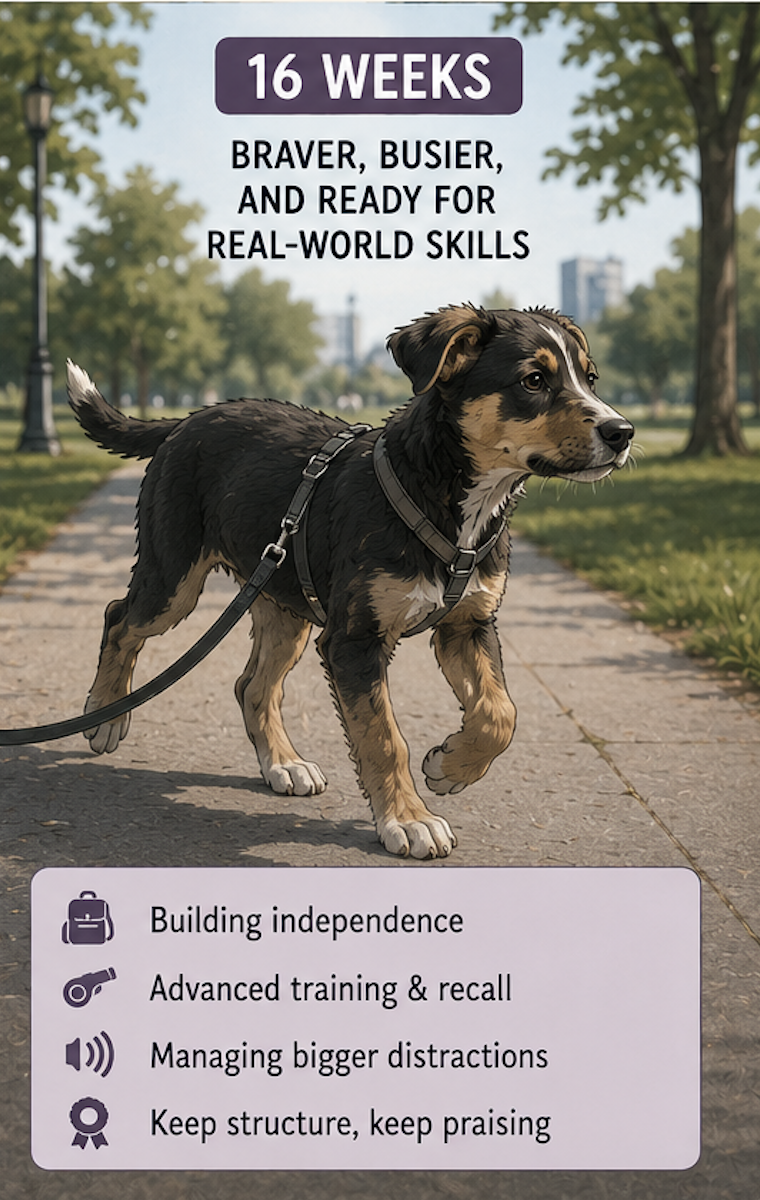
Get out into the world – If you have not already and provided your puppy has had all their vaccinations and your vet is happy for them to be outside, now is the time to start expanding their horizons.
Different surfaces, environments, sounds and people. Don’t treat this as a list to tick off, it’s more about helping your puppy learn that the world is varied, interesting and generally nothing to worry about. Remember the more positive experiences your puppy has now, the more adaptable they’ll be as an adult.
Continue to build a recall worth listening to – At this point your puppy finds you pretty interesting, take advantage of that!
Build your recall in low-distraction environments and make returning to you be fun and exciting for your pup. Use great rewards, celebrate when they come back and try not to only call them back from the fun stuff. These habits will pay off when adolescence arrives and your dog starts to selectively listen.
Keep practising lead walking – Your pup is still a beginner on the lead, it’s important to focus on quality rather than the distance.
A short walk where your puppy spends most of their time engaged with you is more valuable than a long walk where they spend time pulling towards all the new and exciting things. Keep your expectations realistic and remember some dogs find this skill very difficult.
Start thinking about the adult dog – One of the easiest traps to fall into is excusing behaviours because your puppy is still small, some behaviours seem cute when they are small. However it’s a lot less charming when they are fully grown.
The behaviours your puppy practises now are the behaviours that can become habits later. This doesn’t mean correcting every mistake or expecting perfection. It means thinking ahead and encouraging behaviours you want to live with long term. Small lessons now often prevent bigger frustration later.
Consider a one-to-one training session – While puppy classes are fantastic they can’t provide tailored advice for your individual puppy. Also, some puppies don’t get on with classes.
If you’re dealing with nipping, lead walking, recall and any other challenges, or you simply have questions you’d like answered in more detail these individual sessions can be valuable. Sometimes you need a small adjustment to your current training, more detailed help or just reassurance that your puppy is behaving normally.
If your puppy is enthusiastically exploring the world, discovering that distractions exist, and occasionally responding to their recall with, “Sure, maybe later,” you’re not alone.
Sixteen weeks is a wonderful age. Your puppy is growing in confidence, developing their personality, and learning about the world every single day. It’s also the perfect time to build the habits that will help you both navigate the months ahead.
I offer puppy training and one-to-one sessions across Christchurch, Bournemouth, Poole, New Milton, Ringwood, and the wider Dorset and Hampshire area, tailored to you and your puppy.
[Get in touch here] to find out how I can help, or learn more about my [puppy training].
No Comments